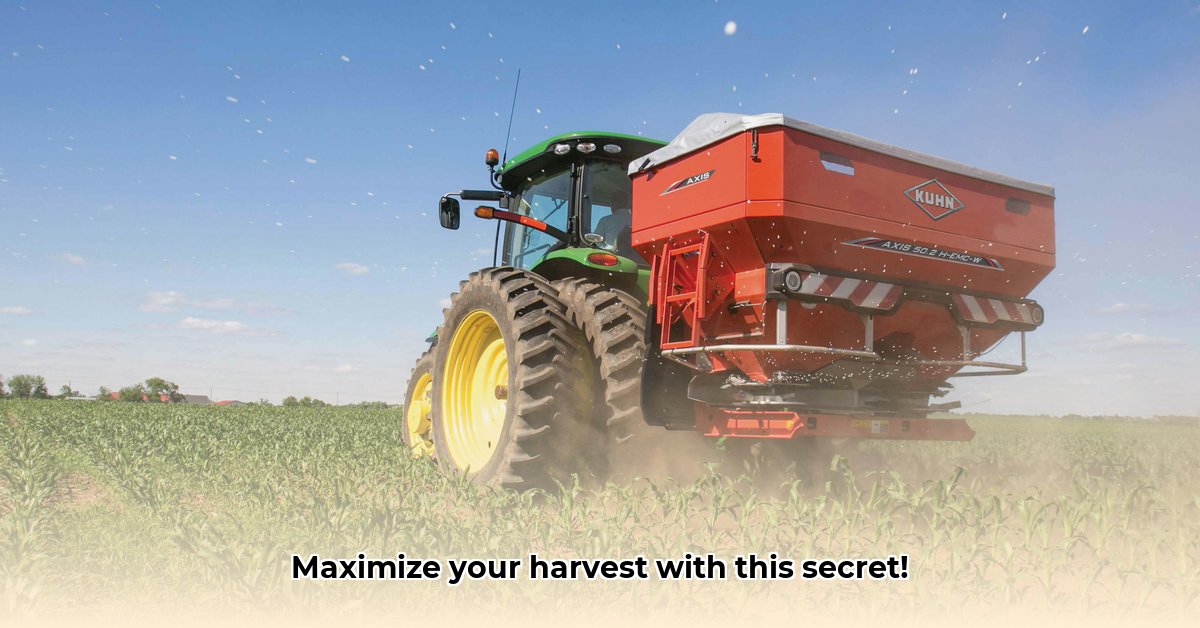
Choosing the right tractor spreader is crucial for maximizing yields and promoting sustainable farming practices. This guide provides actionable advice and comparative analyses to help you select and effectively utilize a spreader that aligns with your farm's size, budget, and crop type. We'll explore various spreader types, essential features, and practical tips for efficient and responsible resource management. For more information on Kubota tractors, check out Kubota Tractors.
Understanding Your Spreader Options: Beyond the Hopper
Tractor spreaders are not one-size-fits-all. Each type offers distinct advantages and disadvantages, making some better suited for specific applications than others. Let's examine the most common types:
3-Point Hitch Spreaders: These are commonly found on smaller to medium-sized farms. Their ease of attachment to tractors and versatility make them a popular choice for various applications. Think of them as the reliable workhorses of the spreader world.
Broadcast Spreaders: Designed for covering large areas quickly, broadcast spreaders are ideal for extensive acreage. Their efficiency comes at the potential cost of precision, making them less suitable for applications requiring pinpoint accuracy. Imagine them as the high-capacity, speedy trucks of the spreading world.
Spinner Spreaders: Utilizing spinning discs, spinner spreaders provide relatively even coverage, particularly for granular fertilizers. Their centrifugal force ensures wide distribution, but adjusting the application rate for optimal precision might require practice and careful calibration.
Pneumatic Spreaders: Employing compressed air for material distribution, pneumatic spreaders offer superior precision, especially for small seeds or specialized fertilizers. This accuracy translates to reduced waste and optimized resource utilization, but they often come with a higher price tag and require more specialized knowledge for maintenance.
Selecting the Right Spreader: Key Factors to Consider
Choosing the ideal spreader involves careful evaluation of several key factors beyond the purchase price. Long-term efficiency and sustainability should be paramount considerations.
Capacity: Larger capacity reduces the number of refills needed, saving time and labor. However, increased hopper size also translates to a heavier load on your tractor, impacting fuel efficiency and maneuverability. Finding the right balance is essential.
Spread Pattern: Uneven spreading leads to wasted resources and inconsistent crop growth. Adjustable spread widths allow tailoring the pattern to suit specific field conditions and crop requirements. Consistent spreading is paramount for optimal results.
Precision Application: Sustainable farming emphasizes minimizing waste. Features like GPS integration and variable rate control enable precise application, ensuring only the necessary amount of fertilizer or seed is used in each area. This conserves resources while reducing environmental impact significantly.
Durability and Maintenance: A robust spreader with easy access for maintenance translates to extended lifespan, reducing long-term replacement costs. Prioritize models with durable materials and straightforward maintenance procedures to minimize downtime and operational expenses.
Cost: Consider both the initial purchase price and ongoing maintenance expenses. A higher upfront investment in a durable, efficient model may prove more cost-effective in the long run compared to frequent repairs or replacements.
Comparative Analysis: Hypothetical Spreader Models
The following table compares hypothetical spreader models. Remember to replace these with actual models and specifications from your local farm supply store or equipment dealer for a truly informed comparison.
| Feature | Model A (3-Point) | Model B (Broadcast) | Model C (Pneumatic) |
|---|---|---|---|
| Capacity (lbs) | 500 | 1500 | 800 |
| Spread Width (ft) | 15-25 Adjustable | 40-60 Fixed | 20-40 Adjustable |
| GPS Integration | No | Yes | Yes |
| Hopper Material | Steel | Stainless Steel | Stainless Steel |
| Price ($) | $1200 | $3500 | $2800 |
Model A (3-Point): Pros & Cons
- Pros: Affordable, versatile, easy to use for smaller farms.
- Cons: Lower capacity, typically lacks GPS integration.
Model B (Broadcast): Pros & Cons
- Pros: High capacity, covers large areas quickly, GPS-enabled options available for efficient application.
- Cons: Higher upfront cost, less versatile for varying field conditions.
Model C (Pneumatic): Pros & Cons
- Pros: Precise application, GPS integration for optimal resource management, ideal for small seeds and precise fertilizer distribution.
- Cons: Higher price, more complex maintenance procedures may require specialized knowledge or professional assistance.
Practical Tips for Maximizing Spreader Efficiency
Effective spreader utilization extends beyond selecting the right model. Proper operation and maintenance are essential for maximizing efficiency and minimizing waste.
1. Calibration: Accurate calibration is crucial for consistent spreading. Always follow the manufacturer's instructions precisely and recalibrate regularly to maintain accuracy. Inconsistent spreading patterns lead to uneven crop growth and wasted resources.
2. Regular Maintenance: Preventative maintenance is essential for extending the lifespan of your spreader. Routine cleaning, lubrication, and inspections help prevent costly repairs and downtime. Addressing minor issues promptly can prevent them from escalating into major problems.
3. Best Practices for Spreading:
- Edge-to-Center Approach: Begin spreading at the field's edge, working inwards to ensure complete and even coverage.
- Slight Overlap: Slightly overlap each pass to prevent gaps and ensure consistent application.
- Consistent Speed: Maintain a steady speed throughout the spreading process to maintain uniform distribution.
Choosing the right spreader is a significant investment, directly impacting both short-term operational costs and long-term sustainability. Careful consideration of your unique needs, budget, and long-term goals is paramount before making a purchase. Prioritize durable, efficient models that contribute to responsible resource management practices. Remember that a well-maintained spreader is more than just equipment; it's a key component of sustainable and profitable farming.